

Supercharged bone broth
Everyone is drinking bonebroth, but are you doing it right...?

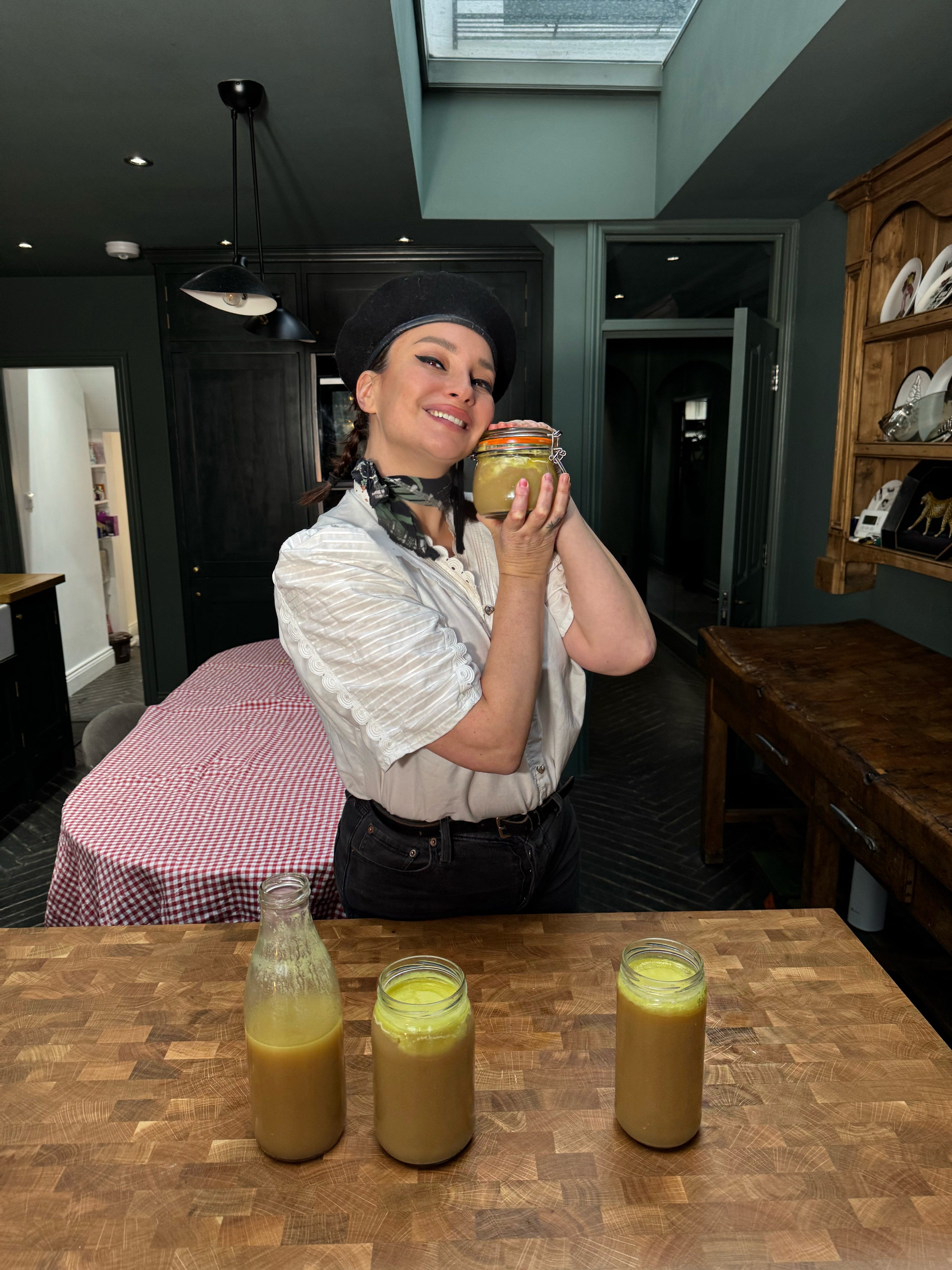
I’ve been down a rabbit hole and found that the Hemsley sisters bought drinking broths into our Psyche in 2013. I’ve had a look and I can’t find a trace of a British food writer that writes about it for the context of health before that, but there are several American references.
BUT ITS JUST STOCK, I hear many of you scream – well actually, it’s not! Making a proper gastronomic stock is a completely different process, with a completely different technique and while we could use bone broth in the place of stock, in a French kitchen, you can’t use stock in place of bone broth…
Let me explain…
The way we make stock in kitchens is by roasting bones and the vegetables to get a very dark caramel lick over the edge. Getting that Maillard reaction and pushing it to its limit is important as the roasting of the bones doesn’t just add flavour, but colour. While in cooking the bones slowly, (and I mean slowly), you gently extract the gelatine, collagen and proteins. You do not boil bones in professional kitchens and a chicken stock, you will generally cook for only 2-5 hours and beef – 4-8 hours. If you boil your bones the result is a cloudy and unrefined stock.
This was drummed into me so hard when I worked in kitchens during my training as a chef. The skimming, the gentle blib of the “not-even-a-simmer” of cook, the adding of ice cubes to remove the fat and in some cases, when making a consommé – a clear meat soup – there was the clearing with egg white to make sure it was like glass!
There was uproar about this over the Hemsley’s recipe, which called for a 24-hour cook, where you actually boiled the bones. People found it hard to see the different agenda between the resulting products. Bone broth’s raison d’etre is something different. While it has to be delicious, its actually about the extraction of as much of the collegian, fat, protein and gelatine from the bones as possible. This is about creating a nutritional drink, that is so concentrated in all those good things that when its cooked and cooled, it will be so firm with gel it is a solid as an actual jelly. To get this, it means boiling the bones to knock out all this stuff. Cloudy is good. Cloudy is nutrition.
Bone broth is rich with all those good skin and gut health things we already mentioned, but also amino acids – watch this space as to why this is good for you – but, also vitamins A, B2, B12, and E, plus omega-3s, omega-6s, and minerals like calcium, iron, selenium, and zinc. There still is contradictory science as to whether it really does heal your gut or make your skin better, but I believe that we absorb the collegian from real bone broth – the jury is still out of the liquids or hydrogenated ones for beauty and lest we forget that in a protein obsessed world – it contains stacks.
I would watch from the side-lines and get really pissed-off for the sisters, because making a French style stock was never the ambition. The girls are also half Filipino, and as someone who spent time growing up in Thailand myself – making a soup base in Asia is way more along the lines of making a bone broth and this was never considered. Most countries in the world make stock and soup bases, but we don’t all share the same technique. You just have to look to Japan for its ramen broths. A shoyu ramen is clean and pure, with no boiling, but the whole point in a Tonkotsu broth is to boil the shit out of the bones to make a fatty and cloudy soup.
The addition of vegetables is also part and parcel of the process. In a bone broth, you want to extract the nutrition and not the flavour, so I only add them in for the last hour. Over the years I’ve always been a little let down on the flavour and always felt there was a missed opportunity to get in a herbal concoction to dissipate out like a tea.
Over the years I’ve gone on the add garlic, ginger, turmeric, lemon grass, lime leaves, herbs and citrus and it now makes a really delicious and drinkable soup.
With regards to the bones. I use a mix of chicken carcasses and wings and then bone marrow as a base, though I’ve added pig’s trotter, chicken feet and oxtail to bring the collegian up in some recipes, though I’ll save you the gore in this one.
I also save chicken carcases in a bag in the freezer after I’ve had a roast chicken, or in fact any bones I get after a roast. I have been drinking this before my coffee and shower, (I leave about 20 minutes before having a collagen coffee -I’ll talk about this soon), and I my tummy skin and nails all feel absolutely magic. As it’s a gel it lasts for two weeks in the fridge and freezes brilliantly. It’s really a simple, valuable, and cheap recipe that can be used as a drink or a base for so many fun recipes, all of which I’ll be posting here.
You can get away with many things in cookery, but if you want to be an avid bone broth maker you need to invest in a really good 20l stainless steel pan. It also goes without saying this will work in a slow cooker (for the same cooking time – you will need to amend the volume of bones as they won’t be big enough for this recipe and also a pressure cooker, but I take no responsibility for the outcome if you do as I have tested this recipe and only ever use a proper stock pot! This is the one I got…
https://www.expondo.co.uk/royal-catering-induction-pot-20-l-10011076?gad_source=1&gbraid=0AAAAADsmLT-xSVi7WtNLEaAP3uXQ2PzbQ&gclid=Cj0KCQiAy8K8BhCZARIsAKJ8sfTnZ6WtKDnZLoZdhesz6EL_heZdurk0wM6xnTWvrz9UiU8oFYbQ1_4aAtzoEALw_wcB
Makes 3 litres
Preparation time 15 minutes
Cooking time 25 hours
3 roast or raw chicken carcasses
10 chicken wings
5 pieces of bone marrow
1 pigs trotter, split in half longways by a butcher (optional, but makes a really gelatinous stock)
3 onions, peeled and quartered
2 garlic bulbs, halved
4 carrots, peeled and chopped into 3 pieces
2 leeks, chopped into 3 pieces
2-3 stalks of celery
For my aromatics I add
A bunch of spring onions, Chopped
(I had some garlic chives too so added them in)
a few fresh herbs if you have time lying around, such as parsley stalks and sprigs of thyme, bay – all this is good stuff
1 bay leaf
8 black peppercorns
A large knob of ginger, sliced
A medium knob of turmeric, sliced
3 stalks of lemon grass
25 lime leaves
The juice of 2 lemons
Salt to serve
Preheat an oven and roast the bones, (all except the trotters) for 40 minutes or until a golden brown. Drain off (and save) the fat.
Place all the bones in a large, deep cooking pot and cover with cold water. Slowly bring to the boil. As it begins to boil, scum will rise to the surface. With a large spoon or a small ladle skim this off, along with any fat. When the broth has reaching boiling point, turn the heat down and let it gently simmer away for 20 hours. (it’s important to make sure it doesn’t boil at this stage, or the bubbles will knock away at the proteins and make the stock cloudy). While it’s simmering, keep skimming the top of the stock as it cooks for the first hour of cooking. I turn mine off overnight and start the clock again the next morning.
As the stock cooks it will begin to reduce – if the water level falls below the contents of the pot, add a bit more cold water (this will reveal any scum hiding at the bottom of the pan).
When the 20 hours are up, bring it to a rolling boil for 2 hours. It will reduce but only by a few inches, if any more you may need to add a little water. Add the vegetables in for an hour, then add the aromatics for the last hour.
Place a fine sieve over a large pan or several mixing bowls and pour the stock through, collecting all the flavoursome juices. If you taste the stock at this stage it may not have much flavour, so you need to reduce the liquid by boiling it slowly in order for the flavours to be condensed. To do this, put it back on the hob and bring it to the boil. As it reduces, taste it every so often and when you have the right intensity of flavour. Do not season your stock. Obviously its going to taste better if you do, but it will still need tweaking in other dishes so its better to use it unseasoned. Either use the stock straight away or let it cool and transfer it to the fridge. A good broth will have a really meaty essence to it and on refrigeration will turn to jelly.
Bring to the boil and season when drunk or use in recipes as described.\
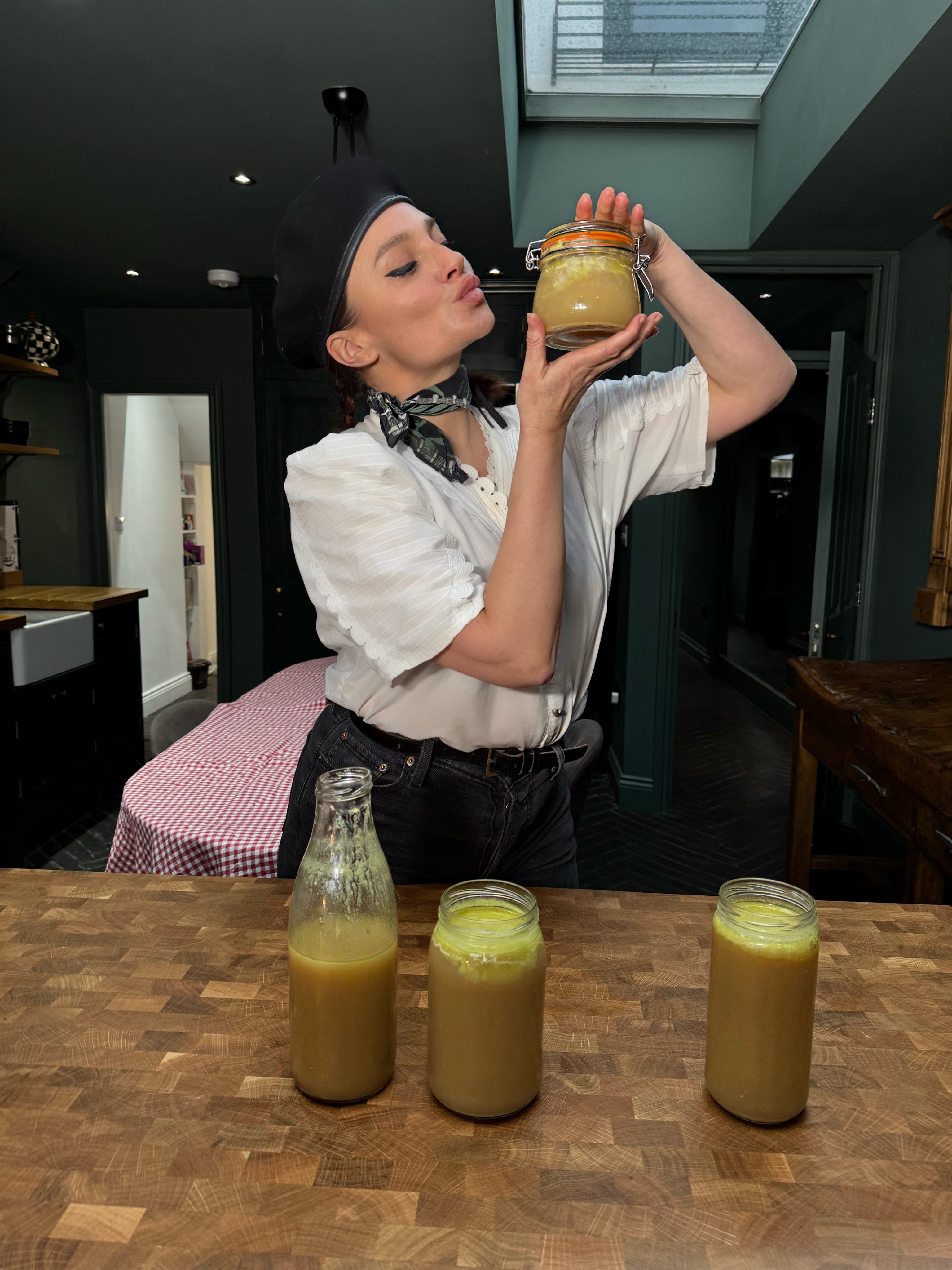
I need this!!
Love this ❤️